Decode Dog & Cat Temperament for Calm, Better Training
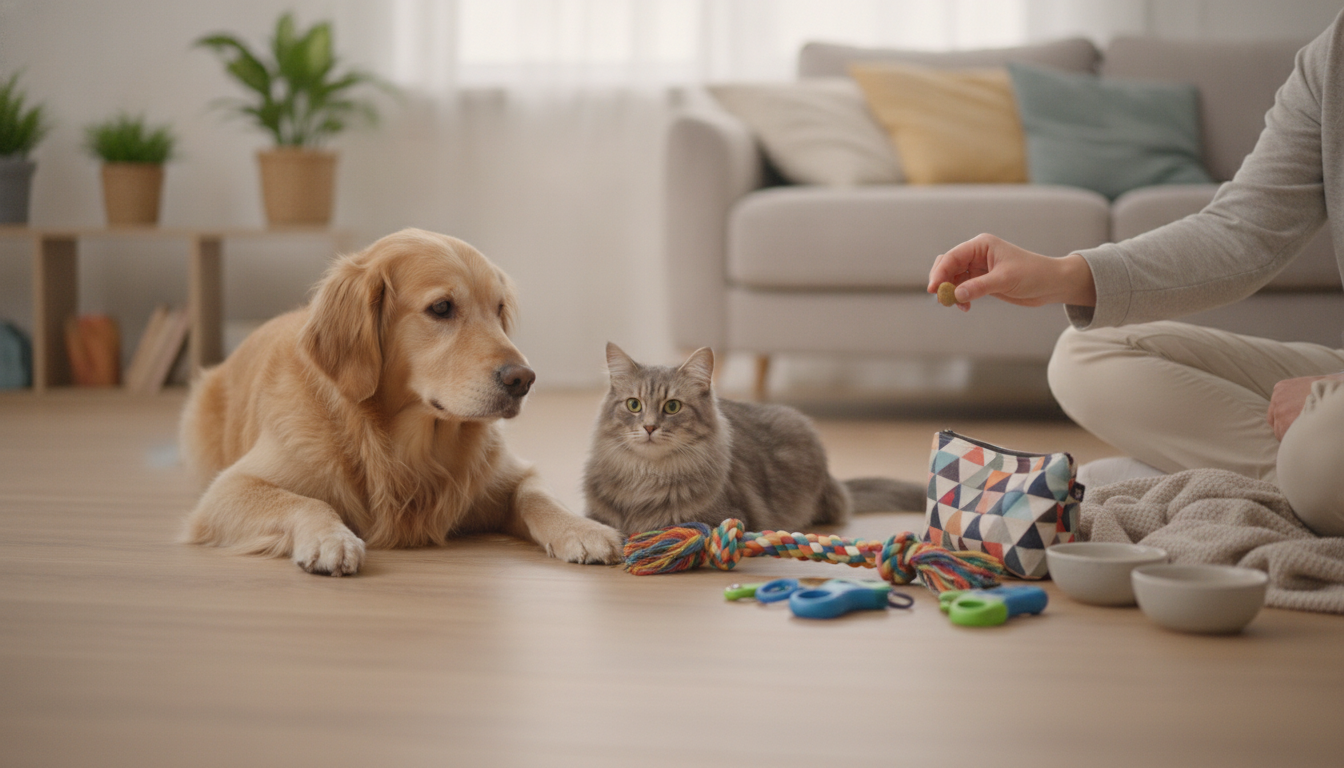
Understanding Your Pet’s Temperament: the key to calmer days and better training
Temperament shapes how dogs and cats respond to people, routines, new places, and training. Behavior often looks random until it’s viewed through a simple lens: what your pet is feeling, what the environment is asking of them, and what past experiences have taught them works. When you learn to spot emotional states early and adjust the setup, training gets easier, handling becomes safer, and daily life feels more cooperative for everyone.
If you want a structured, step-by-step companion to use at home, the in-depth guide Understanding Your Pet’s Temperament: A Complete Guide to Decoding Dog and Cat Behavior for Better Care and Training is a practical reference for observing patterns and building supportive routines.
Temperament vs. behavior: what stays consistent and what changes
Temperament describes relatively stable tendencies—how social your pet is, how sensitive they are to noise or touch, how bold they feel in new situations, and how quickly they recover after stress. Behavior is what happens in a specific moment, and it can change dramatically with context, health, learning history, and environment.
That’s why a “stubborn” dog may actually be overwhelmed by distractions, unclear on the cue, under-motivated by the reward, or physically uncomfortable. A cat that “acts mean” during brushing may be signaling that the pressure is too intense, the session is too long, or past handling felt unsafe.
Training improves behavior by building skills and changing emotional responses. It doesn’t erase temperament; it works with it. The most useful habit is tracking patterns across days and settings so you can separate personality from situational reactions.
The temperament snapshot: four traits to observe at home
A quick snapshot doesn’t require elaborate testing—just brief, low-pressure observation. Focus on four traits plus recovery time:
- Sociability: seeks contact vs. prefers distance (watch responses to guests, kids, and routine handling).
- Sensitivity: startles easily vs. relaxes quickly (vacuum, doorbell, grooming tools).
- Boldness/curiosity: explores vs. freezes/retreats (how long it takes to approach something new).
- Frustration tolerance: can wait and share space vs. becomes vocal/impulsive (food, doors, leash, toys).
- Recovery time: minutes to return to baseline after a stressor (track time rather than impressions).
Simple observation checklist (use a 1–5 score over one week)
| Trait | 1–2 (Low) | 3 (Moderate) | 4–5 (High) | What to do next |
|---|---|---|---|---|
| Sociability | Avoids contact | Selective | Seeks contact | Match interaction level; reward calm approaches |
| Sensitivity | Easily startled | Variable | Steady | Lower intensity triggers; add gradual exposure |
| Curiosity | Reluctant | Cautious | Explores readily | Use enrichment; keep sessions short for cautious pets |
| Frustration tolerance | Vocal/impulsive | Sometimes waits | Waits well | Teach wait/settle; increase difficulty slowly |
| Recovery time | Slow to calm | Average | Quick recovery | Add safe spaces and decompression routines |
To make tracking easier, some pet parents use printable worksheets to log scores, triggers, and recovery time in a consistent way. A general option that works well for checklists and daily notes is Memory Boost Worksheets for Students & Adults (Printable Digital Download), which can be repurposed as a simple behavior journal.
Reading body language: calm, stressed, and escalating signals
Body language is most accurate when you read clusters of signals—posture, facial cues, and movement—rather than relying on one sign. Distance matters too: a stiff pet across the room is giving you a “heads up,” while a stiff pet at your feet may be close to reacting.
Early stress signals are the easiest to help. Waiting for growling or hissing is usually waiting too long. Cats often show subtle avoidance first (turning away, pausing, grooming), while dogs commonly show displacement behaviors (sniffing, lip licking, yawning) when conflicted.
Common cues and likely emotional states (context matters)
| Cue | Dog: common meaning | Cat: common meaning | Supportive response |
|---|---|---|---|
| Loose body, soft eyes | Relaxed/engaged | Comfortable/settled | Reward calm; keep interactions gentle |
| Stiff posture, hard stare | Concern/guarding | High vigilance | Increase distance; pause interaction |
| Lip lick/yawn (not tired) | Stress/conflict | Less common | Lower pressure; offer choice and space |
| Tail low/tucked (dog) or puffed (cat) | Fear/uncertainty | Fear/arousal | Create escape route; reduce trigger intensity |
| Ears pinned back | Fear/stress | Fear/irritation | Stop handling; reset with calm routine |
| Growl/hiss | Clear warning | Clear warning | Do not punish; back off and reassess trigger |
| Panting (cool environment) | Stress/pain possible | Rare; urgent if open-mouth breathing | Check temperature, pain signs; consult a vet if unsure |
Common temperament patterns and what helps (dogs and cats)
Training that matches temperament: kinder, faster progress
For science-based guidance on humane methods and why fear-based punishment can backfire, see the American Veterinary Society of Animal Behavior (AVSAB) position statements.
Environment and routines that reduce problem behaviors
For additional cat-specific behavior insights, the ASPCA’s cat behavior resources are a reliable starting point. For dog body language basics, the RSPCA guide to canine body language offers helpful visuals and explanations.
When to get professional help
FAQ
How can temperament be assessed without stressing a pet out?
Use brief, low-pressure observations across several days and score things like curiosity, comfort with handling, and recovery time after small stressors. Avoid forced interactions, keep novelty at a distance, and reward calm choices so your pet stays under threshold.
Is growling or hissing “bad behavior”?
No—treat growling or hissing as communication that your pet is uncomfortable. Increase distance, remove the trigger, and adjust the plan rather than punishing warnings; if it’s frequent or intense, consult a vet or qualified behavior professional.
What are early signs a dog or cat is getting overwhelmed?
Look for subtle stress cues such as freezing, turning away, stiff posture, pinned ears, and escalating vigilance; dogs may lip-lick or yawn, while cats may suddenly groom or avoid. Intervene early by adding space, lowering intensity, and returning to a calm routine.











Leave a comment