Indoor Cat Enrichment: DIY Toys, Play & Home Setup
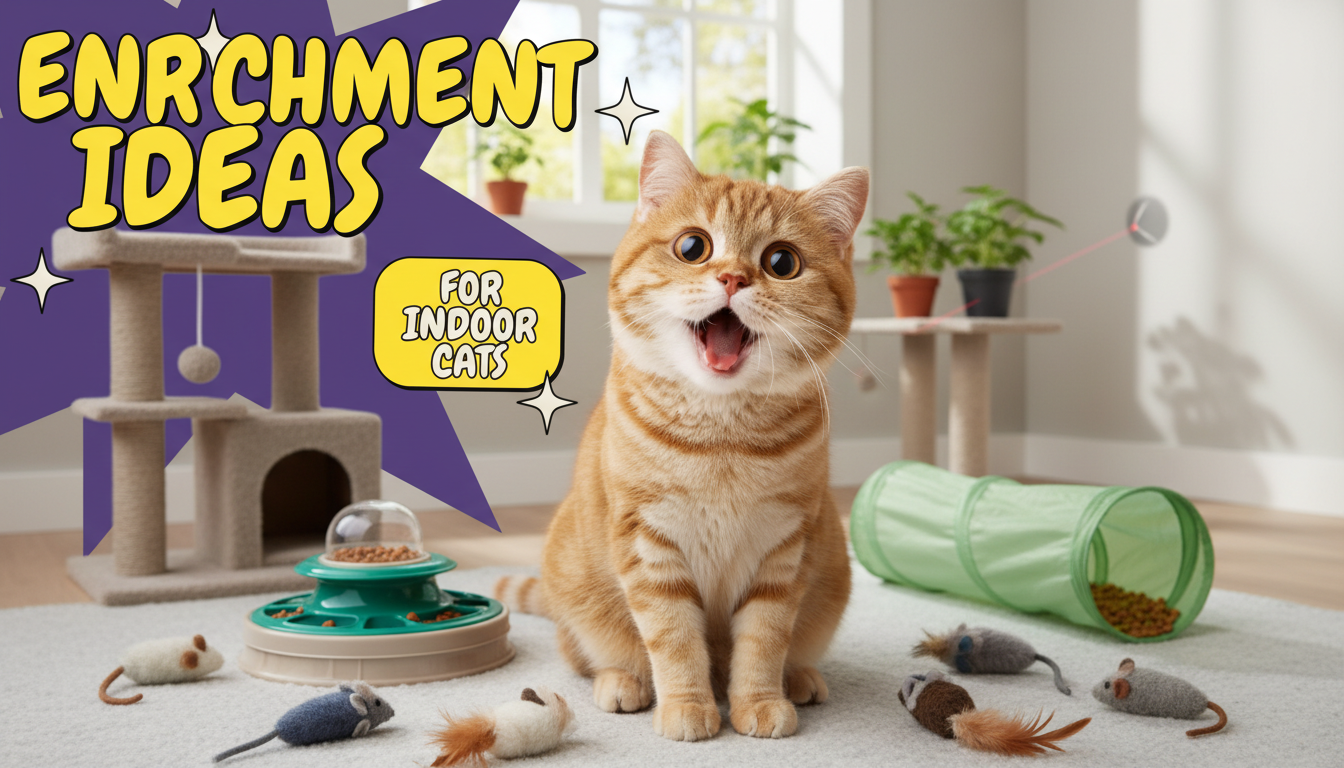
Enrichment Ideas for Indoor Cats: DIY Toys, Play Routines, and a Cat-Friendly Home
Indoor cats thrive when daily life includes hunting-style play, problem-solving, movement, and safe places to climb, hide, and rest. A simple routine plus a few low-cost DIY activities can reduce boredom behaviors (night zoomies, over-grooming, attention yelling) while supporting healthy weight and confidence. Use the sections below to build an enrichment “menu” that fits your cat’s age, energy level, and space.
What Enrichment Means for Indoor Cats
Enrichment is anything that lets a cat express normal feline behavior in safe, satisfying ways. Instead of relying on one toy or a single “big play session,” aim for variety that matches how cats naturally interact with their environment.
- Match enrichment to natural behaviors: stalk, chase, pounce, climb, scratch, chew, scent-mark, and observe.
- Use four pillars: physical (movement), mental (puzzles), sensory (smell/sound/textures), and social (interaction on the cat’s terms).
- Rotate options to keep them fresh: offer 2–3 choices per day, then swap them out every few days.
- Watch for under-stimulation: destructive scratching, overeating, repeated knocking items down, excessive vocalizing, or over-grooming.
For deeper guidance on home setup and stress reduction, the American Association of Feline Practitioners (AAFP) Feline Environmental Needs Guidelines is a helpful, science-based reference.
A Simple Daily Play Routine (That Works in Small Spaces)
Most indoor cats do best with several short sessions rather than one long workout. Think “mini-hunts” that end with success and a small food reward.
- Keep it short: 5–10 minutes, 2–3 times daily is often ideal.
- Follow the hunt sequence: lure (stalk) → chase → pounce → “catch” → small snack/meal to complete the cycle.
- End on a win: allow a few catches so play stays satisfying, not frustrating.
- Hit common energy peaks: morning and evening; add midday for high-energy cats.
- Adjust for age: kittens need more frequent bursts; seniors usually prefer gentle “ground prey” movement and fewer jumps.
- Add independent options: puzzle feeders, scavenger hunts, and window perches for busy hours.
| Time | Activity | Goal | Tip |
|---|---|---|---|
| Morning | Wand-toy hunt + 1–2 treats | Burn energy, prevent boredom | Keep the “prey” low, then add a short sprint |
| Midday | Scavenger hunt with kibble/treats | Mental work, slow feeding | Hide 6–10 pieces in easy spots, then increase difficulty |
| Evening | Fetch or “kick” toy session | Exercise + confidence | Use a soft ball or fabric kicker; stop before over-arousal |
| Before bed | Calm grooming or clicker trick | Settle and bond | Pair with a cozy resting spot and consistent cue |
DIY Toys and Low-Cost Enrichment You Can Make Today
You don’t need expensive gadgets to keep an indoor cat engaged. The best DIY toys are simple, safe, and easy to replace when they get worn.
- Paper and cardboard: crinkle balls, paper-bag “tunnels” (handles removed), and box forts with peek holes.
- Toilet-paper roll puzzle: fold the ends, add a few treats, and let your cat bat it around. Supervise if your cat shreds and eats cardboard.
- Sock “kicker” toy: fill a clean sock with fabric scraps; add a pinch of catnip or silvervine for cats that respond; tie off securely.
- Towel “snake” for foraging: roll a towel with a few treats inside for supervised searching; remove when finished.
- Ice-cube lick enrichment: freeze diluted wet-food “broth” and offer briefly for a focused licking session (best on an easy-clean surface).
Safety checks matter: avoid string/yarn, loose ribbons, rubber bands, hair ties, and small parts that can be swallowed. Always supervise new DIY items and retire anything frayed or damaged.
Food Enrichment: Turn Meals Into a Hunt
Food enrichment is a powerful boredom-buster because it taps into a cat’s natural drive to work for rewards. It can also slow fast eaters and add movement without needing extra space.
If your cat’s appetite, grooming, or litter box habits change suddenly, check with a veterinarian and consider reviewing behavior resources from the Cornell Feline Health Center.
A Cat-Friendly Home Setup: Vertical Space, Scratching, and Rest Zones
Rotate, Track, and Fine-Tune: A Weekly Enrichment Menu
Printable Help: Ready-to-Use Checklists, Toy Ideas, and Routine Planners
- Printable cat enrichment guide with DIY toys and routine planners (digital download) helps you quickly choose activities by category without rebuilding your plan every day.
- Useful pages to keep on hand: a daily routine planner, weekly rotation chart, DIY toy instructions, enrichment “menu” cards, and a boredom-behavior troubleshooting checklist.
For pet parents who like structured tracking and habit-building, pairing routines with a simple personal worksheet system can help you stay consistent week to week: Memory Boost Worksheets for Students & Adults (Printable Digital Download).
FAQ
How much play does an indoor cat need each day?
Many indoor cats do well with about 15–30 minutes total per day split into 2–3 short sessions. Adjust up for high-energy kittens and down for seniors, and end play with a small snack to complete the “hunt” cycle.
What are safe DIY cat toys and what should be avoided?
Safer DIY options include cardboard boxes, paper balls, supervised treat-filled paper rolls, and a securely tied sock kicker. Avoid string/yarn, ribbons, rubber bands, hair ties, small plastic parts, and any toy that frays or can be swallowed.
How can a small apartment be enriched for a cat?
Prioritize vertical space (shelves or a tall tree), a secure window perch, and rotating a small set of toys every few days. Use multi-location feeding puzzles to encourage movement and create calm hideouts so your cat can rest undisturbed.











Leave a comment